Blue zircon is a thread of the fabric of Greek mythology. In the tale of the Greek youth Hyacinth, a blue hyacinth flower grew in the place where he died. In a less charming but equally fascinating fable, zircon was used for exorcism. The methodology was simple—a cross was cut into a loaf of freshly baked wheat bread. Then, a zircon was used to trace along the cross shape before the bread was eaten to drive away the evil spirits.
Sunday, February 21, 2021
Saturday, February 20, 2021
Turquoise—Turkish Stone
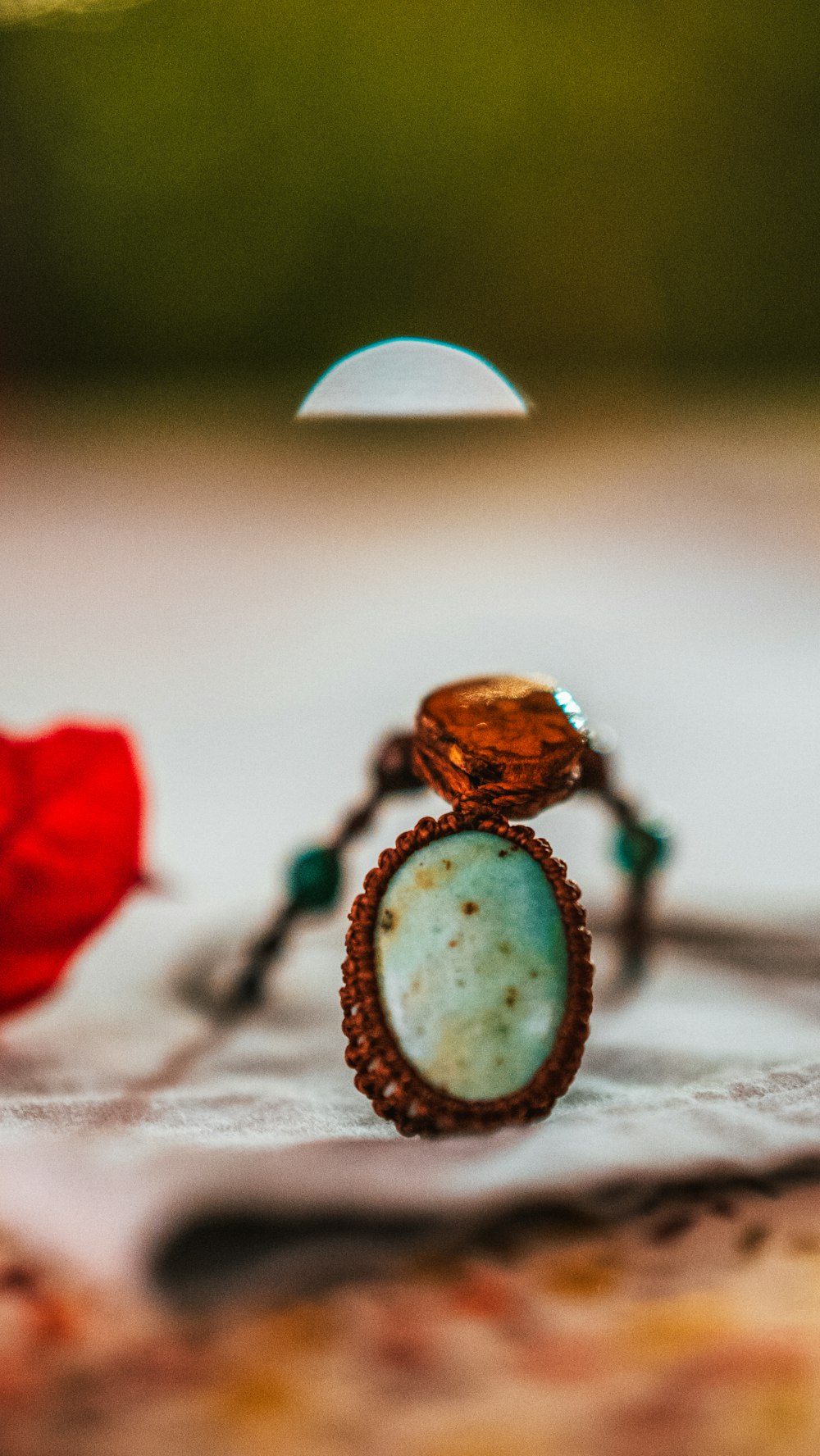
One pretty legend relating to turquoise is that is generated by rainbow touching the earth. Turquoise seems to have always had a mythic link to horses, beginning with the medieval belief that anyone wearing this stone would be protected from falling off the animal. Sir John Mandeville’s Lapidaire further claimed that this blue-green stone prevented horses from the harm of drinking cold water when they were sweaty and hot. Turkish equestrians went so far as to attach this crystal to the bridles of their horses as a talisman for the animals.
An unusual story about turquoise comes from the court of Emperor Rudolph II, whose physician was given a specimen that had faded completely. The doctor’s father had given it to him with these words of wisdom, “Son, as the virtues of the turquoise are said to exist only when the stone has been given, I will try its efficacy by bestowing it upon thee.” The young man set it in a ring and in one month’s time, the splendid color was completely restored.
Saturday, July 11, 2020
Calling Down the Sisterhood: Invoking Goddesses in Your Spellwork
She is the Italian “Queen of the Witches” who descends to earth to preserve the magic of the goddess, Diana, her mother. Through Aradia’s lineage, she is also a lunar deity. She is affiliated specifically with Dianic Wicca. Aradia is an excellent goddess to invoke for protection for any moon rituals you perform or create.
Artemis: Queen of the Moon
She is the Greek goddess of the moon. In her Roman form as Diana, she is the deity to whom Dianic witches and priestesses are devoted. She is a bringer of luck, the goddess of the hunt, and a powerful deity for magic and spell work. As the huntress, she can help you search out anything you are looking for, whether it is tangible or intangible. As a lunar deity, she can illuminate you. Invoke Artemis when you want to practice moon magic, and study her mythology further to design original lunar ceremonies. Enshrine her to bring good luck.
Athena: She Who Knows All
She is a goddess who rules both wisdom and war. Athena is a deity to invoke if you are doing ceremonies for peace, learning, protection, or any work-related issues. She can help you overcome any conflict with friends, families or foes.
She was a Celtic solar goddess of poetry, smithcraft, and healing before the Catholic Church canonized her as a saint. Brigid is dually connected to the elements of water and fire. One way to bless water for ceremonies, your altar and home is to pray to Brigid to sanctify the water. She is a guardian for all animals and children, taking care of all matters related to child rearing. Brigid is also a goddess of inspiration. You can create creativity rituals or purification rites that include Brigid.
Ceres: Goddess of Plenty
She is the great Roman grain goddess. Think of her every time you have some cereal, which is named after her. The early summer festival, the Cerealia, honors Ceres for supplying the harvest and an abundance of crops. Any ceremony for planting, growing and cooking could involve this bounty-bringer. If you are going to plant a magical garden, craft a ritual with Ceres and make an outdoor altar to this grain goddess.
Hecate: The Face of the Dark Moon
She is a crone goddess who shows her face in the dark moon. Hecate is the goddess of where three paths meet and as the banisher of evil, which serves us well in rites of closure, “letting go,” and getting rid of any negatively charged aspect of your life. Any time you want to bring something to an end, invoke Hecate for help. Funeral rites or ceremonies of remembrance, especially those for older women, are appropriate occasions for summoning Hecate. As the personification of the dark moon, she is also the goddess of divination and prophecy. Try creating a dark moon prophecy circle, and invite her for deep and wise insight. Design a ritual during the dark moon with Hecate for ultimate feminine wisdom and a fresh new beginning.
Hestia: Ruler of Hearth and Home
She is the goddess of home and hearth whom the Romans knew as Vesta. Hestia is associated with the element of fire, and is concerned with the safety and security of the individual as well as families. As goddess of the hearth, she rules the kitchen, making it possible to perform magical baking recipes with your mixing bowl serving as a cauldron, enchanting it with spices such as cinnamon and cloves. Hestia is the perfect deity to help design a new house. She is a blessing there to help you with cleaning and purification rituals in your living space and sacred space.
Hokmah: She of the Highest Wisdom
She is the holy spirit, an ancient Hebrew goddess of wisdom, the Gnostic Sophia. Hokmah is also related to Egypt’s Ma’at, mother of creative works of power, from which the universe was formed. It was believed by scholars that bereshith, the very first word of Genesis, really refers to this goddess of wisdom. The book Targum of Jerusalem discusses the first words of Genesis and the goddess of wisdom at length. Bereshith is traditionally translated as “in the beginning.” Hokmah appears often in pre-Christian and early Christian writings, and Philo of Alexandria described her as the spouse of Jehovah. King Solomon himself decreed that Hokmah must be obeyed in “The Wisdom of Solomon,” a chapter not included in the biblical canon and established as apocryphal. Hokmah’s symbol, like that of Venus, is the dove. You can summon the eternal wisdom of Hokmah with an image of a dove on your altar. Ignored and redacted from history, she holds vast beneficial power. You can design a women’s mystery rite by meditating on this ancient spirit. Allow inspiration to come and be literally filled with the holy spirit. Her wisdom will enlighten you and reveal how the rite should be designed.
Isis is the only goddess who could guarantee the immortality of the Egyptian pharaohs, resurrecting them as she did Osiris. Her worship spread, becoming an enormous cult that appealed to the entire Roman Empire. She has great appeal as a divine mother. Isis is the daughter of Nuit, the goddess of the sky, and of Seb, the god of earth. The ancients worshipped her as the Queen of Heaven, and she is often depicted with wings. Isis is the link between birth and death and can be invoked in rituals designed to celebrate existence under our banner of stars. Her origins in myth show her to have begun as a sun deity, but her sphere of influence has grown to include the moon.
Kali: Mother of All Creation
She is the Hindu goddess of the ever-cycling nature of creation and destruction. Kali can be called on to protect and defend women of any age. If you are afraid for yourself, pray aloud to Kali in her destroyer aspect, which wears a necklace of skulls that will scare off any attacker. If someone is recovering from an abusive relationship, Kali can be called on to help with healing and renewing courage and self-esteem. Kali is not to be feared, but respected and admired. One of Kali’s aspects is the Indian goddess, Vac. This incarnation of Kali is the “Mother of All Creation” who spoke the first word, OM, which gave birth to the universe. She also invented the Sanskrit alphabet. An image of Kali in your office or cubicle will keep trouble at bay and keep you strong and active and fully in your power. Give offerings to her occasionally with your girlfriends in your life with “womanpower” rituals.
She is the full moon, another Greek aspect of the lunation cycle. She sheds light on the world and on all of us, inside and out. Her mythology is that as a teacher of magic and all things supernatural, passing her special knowledge on to her students. She is also a mentor, and her light illuminates our intelligence and ability to think clearly with logic.
Shekina: The Splendor That Feeds Angels
She is the female deity who is “God’s glory” and the spouse of an ancient Hebrew god. Older rabbinical texts describe her as the “splendor that feeds angels.” She was the only one to get away with being angry with the Hebrew god. She is associated with Sophia and Mari-Anna. Having been redacted from all biblical texts, Shekina was veiled in obscurity until some medieval cabbalists rediscovered her. Glimmerings of Shekina show up in passages of the Talmud, telling the story of the exiled Israelis wandering into the wilderness with Joseph’s bones and a second ossuary, or “bone box,” containing “the Shekina” in the form of a pair of stone tablets. Be very creative in designing rituals, altars, offerings and ceremonies honoring this deity, since you are rebuilding a lost part of goddess history. One daring ritual could include calling a women’s circle and rewriting the tablets of wisdom. Call upon your inner Shekina and inner knowledge for guidance in this highly original approach to ritual.
This Gnostic goddess charges us to be silent. In Roman mythology she stands for the secret name of Rome, which could not be spoken aloud, and thus she is depicted as a hooded woman with a finger to her lips. Gnostic texts speak of Sige’s origins as the mother of Sophia. She is the primordial female creator: out of silence came the logos, or the word. The cult, rituals and folklore regarding Sige were held so strictly secret that we know nothing about them now. But, since creation comes out of silence, there is complete creative freedom for you to recreate new myths, stories and celebrations for this obscure deity. Silent celebrations, quiet meditations and secret spells no doubt have the approval of Sige.
Sunna: Shedding Light on the World
She is the ancient Germanic goddess of the sun, proof that our big star is not always deified as male. The Teutons also referred to this very important divine entity as “Glory of Elves.” In the great Northern European saga, the Poetic Edda, Sunna was said to have a daughter who sheds light on a brand-new world. Other sun goddesses include the Arabian Attar, the Japanese Amarterasu and the British Sulis, “the sun’s eye.”
The Roman goddess of love, Venus is associated with ultimate femininity, ultimate sexuality, ultimate fertility and all that is beautiful. In Western early myth, the planet Venus was seen as “Daughter of the Moon” and all of the early Venusian goddesses have Neolithic roots as lunar deities. The word veneration means to worship Venus, and she should be venerated in all the love spells of your own design as well as celebrations and circles taking place on her day—Friday. The lore and mythology of Venus is well known, as she has been imprinted on our consciousness as the beautiful naked nymph on a half shell rising out of a foamy wave of the ocean. Honor her by creating venerable dances on the beach, and write love prayers and poems inspired by the love in your own heart.
Friday, July 10, 2020
Summoning the Gods: Invoking Help from the Heavens
Here is a selection of male deities to choose from in your ritual work. Included are some of the more commonly invoked gods, and also some rare and obscure powers to consider for ceremonies and incantations. There are many rich resources for further study, such as mythology, which is a real tapestry of humankind’s deepest truths, eternal struggles and victories. I have learned many stories that have inspired and enriched my spiritual practices, from books such as Bullfinch’s Mythology, Robert Graves’s The White Goddess, and James G. Frazer’s The Golden Bough. Reading more about the history and folklore of deities will give you ideas and inspiration for rituals of your own creation. The namesake of a Celtic goddess, I love exploring myths of old and applying the wisdom to my modern way of life. Our forebears passed a treasure trove of knowledge to us.
He is the god of love, and partner of the goddess of love, Aphrodite. Adonis is also an herbal deity with domain over certain plants and flowers, representing earth, fertility and health. He is often invoked for love rites and spells and can help the querent discover whether a potential lover is true or unfaithful. Ask Adonis for help with your gardens and for healing. He is a real helpmate.
Apollo: Brother of Artemis
He is the god of music and the arts and brother to Artemis, the Greek goddess of the moon and the hunt. If you are an artist or musician, ask Apollo to help you with the creative process or invoke him to banish writer’s block.
Cernunnos: Wild Man Spirit
He is the Horned God of the Celts, sometimes called Herne the Hunter. Cerunnos is a virile figure and represents man’s sexual power. He is the one to call on for animal magic, fertility and any earth or environmental ceremonies you want to create to represent the wild man’s spirit.
Dagon: Oracular Fish God
He is the fishtail god of the Phoenicians, symbolizing the sea and rebirth. Originally a corn god, Dagon protects against famine and is also a god for oracles. He can be called on in water, gardening, food rituals and the celebration of life. Pisceans should familiarize themselves with this half-man, half-fish god when creating original rituals, and should ask for Dagon’s aid in divination.
Ganesha: He Keeps Obstacles Out of Your Way
This elephant-headed Hindu god of good fortune is the “remover of obstacles.” Ganesha’s domain is literature, and he dispenses much wisdom. Summon him for any new business and for rituals of prosperity. Many people keep Ganesha figures and images in their offices and on altars to ensure that he keeps obstacles at bay. Money spells and work-related rites are greatly abetted by the presence of this agreeable divinity.
Hermes: Revealer of Mysteries
He is associated with the Roman god Mercury and the Egyptian scribe god, Thoth. Hermes is an important deity for astrologers and metaphysicians, as he is credited with the invention of alchemy, astrology and several other occult sciences. “Thrice Great Hermes” is revered by ceremonial magicians, and is believed to be the wisest of all. He is the psychopomp who conducts the newly dead to the Underworld. Early Christians and Gnostics saw Hermes as a precursor to Christ, a divine prophet, the revealer of mysteries, and the giver of enlightenment. The Hermetic Cross is an adaptation of the insignia of Hermes. Hermes should be invoked if you are fashioning any rituals using the signs of the zodiac, foretelling the future or acquiring the deepest wisdom.
He is the Egyptian god of light and healing, the “all-seeing eye,” and child of Isis and Osiris. Horus is often depicted with the head of a falcon and the body of a man. You can turn to him in meditation and prayer when you are looking for his beacon of “enlightenment.” Horus is also a healing power to invoke in healing rituals.
Janus: The Gatekeeper of the Year
He is the gatekeeper from whom the word “janitor” comes. Janus has two faces, and was at one time identified with Jupiter. He is the gatekeeper of the year, as the divinity of the first month of the year, January.
Lugh: God of the Harvest
His name comes from the Celtic languages, translating to “Shining One.” He is a warrior sun god and also guardian of the crops. Lugh has his own festival, Lughnasadh, which takes place every year on August 1 to celebrate harvest time. A ritual of gratitude for life, luck and prosperity will keep the bounty flowing. If you need a guardian or help with interpersonal problems at work, turn to Lugh as your defensive deity.
Mithra: Crowned By Cosmic Rays
He is the “Bringer of Light,” a Persian god of the sun and protector of warriors. Mithra corresponds with the element of air and comes from a deep mystery tradition of Mesopotamian magic and fertility rites. If you have a loved one in a war far away from home, you should create a special altar for your beloved with Mithra, who is the “soldier’s god.”
He is the Norse equivalent of Zeus and Jupiter, and is King of the Aesir. Odin rules wisdom, language, war and poetry. You can appeal to him by carving runes or writing poetry. Odin can help you with any kind of writing, giving you the energy to forge ahead with purpose and passion. He can even help you write your own rituals and poetic magical chants.
Osiris: Lunar Egyptian God of Beginnings and Endings
He is the Egyptian god of death and rebirth, who also takes care of the crops, the mind, the afterlife and manners. Husband to Isis and father of Horus, Osiris is a green god who is deeply connected to the cycles of growing and changing seasons. Turn to this god for rites of remembrance and for help with grief and mourning.
Pan: Bucolic Earth Deity
He is the goat-like god of the pastoral world, as well as of lust and fertility. Pan represents the earth element and can be invoked for any erotic spells or ceremonies of a sexual nature. Call on Pan any time you want to have fun. As a minor love god, he is an essential guest for Beltane, a modern Pagan version of Valentine’s Day.
Talieisin: Wizard, Bard and Prophet
Although not technically a god, this monumental figure is said to live in the land or “summer stars” and is invoked in higher degrees of initiation in some esoteric orders. Talieisin is the harper poet from Welsh tradition, steeped in magic and mystery. He is associated with the magic of poetry, and embodies wisdom and clairvoyance. Talieisin is a helpmate to musicians and creative folks. If you are a solo practitioner and want to create a ceremony of self-initiation, Taliesin is a potent power to engage.
Thor: Power of Protection
The Norse sky and thunder god of justice and battle uses his thunderbolt to exact his will. Medieval Scandinavians believed the crack of lightning and thunder was Thor’s chariot rolling through the heavens. Turn to Thor when you need spirituality to solve a legal matter. He is also a powerful protection deity to use in ritual.
Monday, January 20, 2020
Deities of the Ancients
Supreme God: Woden, Frigg (Germanic); Jupiter, Juno (Roman); Zeus, Hera (Greek); Ra (Egyptian); Marduk (Babylonian)
Creator: Ptah (Egyptian); Anu (Babylonian)
Sky: Frigg (Germanic); Jupiter (Roman); Uranus, Zeus (Greek); Nut (Egyptian); Anu (Babylonian)
Sun: Apollo (Roman); Helios (Greek); Ra (Egyptian); Anu, Anshar (Babylonian)
Moon: Diana (Roman); Artemis (Greek); Thoth (Egyptian); Sin (Babylonian)
Earth: Sif (Germanic); Tellus (Roman); Gaia (Greek); Geb (Egyptian); Enlil (Babylonian)
Air: Enlil (Babylonian)
Fire: Hoenir (Germanic); Vulcan (Roman); Hephaestus (Greek); Girru (Babylonian)
Sea: Niord (Germanic); Neptune (Roman); Poseidon (Greek)
Tuesday, November 19, 2019
In a Pinch Prosperity Spell
Cinnamon, which you probably have a plentitude of in your kitchen cabinet, is a major source of prosperity and can even bring it about in a hurry. Thursdays are named for Jupiter, or Jove, originally Thor of Norse mythology, who represents joviality, expansion, and all things abundant. Here is a Jupiterian Thursday spell that will bring excellent opportunities your way.
Gather both cinnamon sticks and the powdered kind and place on your altar. On a Thursday, light incense, preferably cinnamon, and walk through your house, wafting the delightfully sweet smoke in every room. Light two altar candles, one brown and one green. Gather flowers, preferably yellow ones, such as daisies and adorn your altar with them. Stand in front of your natural altar and consider the wonderful, full life you are going to enjoy. Pour the cinnamon spice and sticks into a bowl and pray aloud:
I am grateful for all I receive, no matter how small.
Now, I find I am in need,Blessings shall come now with great speed.
As above, so below,The wisdom of the world shall freely flow.
To perfect possibility, I surrender.
And so it is. Blessed be to all.