Showing posts with label Ceremony. Show all posts

Monday, August 8, 2022

Lucky and Unlucky Dates

Month: January
Lucky Dates: 3, 10, 27, 31
Unlucky Dates: 12, 23

Month: February
Lucky Dates: 7, 8, 18
Unlucky Dates: 2, 10, 17, 22

Month: March
Lucky Dates: 3, 9, 12, 14, 16
Unlucky Dates: 13, 19, 23, 28

Month: April
Lucky Dates: 5, 17
Unlucky Dates: 18, 20, 29, 30

Month: May
Lucky Dates: 1, 2, 4, 6, 9, 14
Unlucky Dates: 10, 17, 20

Month: June
Lucky Dates: 3, 5, 7, 9, 13, 23
Unlucky Dates: 4, 20

Month: July
Lucky Dates: 2, 6, 10, 23, 30
Unlucky Dates: 5, 13, 27

Month: August
Lucky Dates: 5, 7, 10, 14
Unlucky Dates: 2, 13, 27, 31

Month: September
Lucky Dates: 6, 10, 13, 18, 30
Unlucky Dates: 13, 16, 18

Month: October
Lucky Dates: 13, 16, 25, 31
Unlucky Dates: 3, 9, 27

Month: November
Lucky Dates: 1, 13, 23, 30
Unlucky Dates: 6, 25

Month: December
Lucky Dates: 10, 20, 29
Unlucky Dates: 15, 26 

Monday, June 27, 2022

September

September 1, Greek New Year September 2, St. Mama’s Day in Cypress

September 3, Sukkot, Feast of the Tabernacles, a Jewish moveable feast celebrated around this time

September 4, Founders day of Los Angeles (1835), the “City of Angels,” celebrated with processions, dance, rodeo, and Mass

September 5, Mother Teresa died in 1997

September 6, First day of the Hebrew calendar since 3761 BCE

September 7, Rificolne in Florence and Siena celebrating Cosimo de Medici’s 1260 victory: a celebration with picnics, lantern processions, folk singing, and street dancing.

September 8, Water Festival honoring springs (Tibet) 

September 9, Chrysanthemum Festival in Japan, Choyo no Sekku, Kiky bo Seku

September 10, St. Salvi Day, French bishop who died and came back to life in 574 BCE still celebrated with parades, feasts, and Mass

September 11, Coptic New Year in Egypt

September 12, National Grandparent’s Day (United States) 

September 13, Epulum Jova, The Great Banquet in Rome 

September 14, First day of Greek Eleusinian Mysteries 

September 15, Day to Respect the Aged (Japan)

September 16, Mexican Independence Day in Mexico (1810) 

September 17, Feast of Hildegard of Bingen

September 18, Feast of Demeter (Ancient Rome) 

September 19, International Talk Like a Pirate

September 20, International Day of Peace

September 21, Autumn equinox (on or around this day)

September 22, Birthdays of Bilbo and Frodo Baggins in The Lord of the Rings

September 23, Shubun no Hi, grave visiting day in Japan 

September 24, Schwenkenfelder, German Thanksgiving

September 25, Rosh Hashanah, the movable Jewish feast of the New Year, occurs around this date

September 26, Saint Cyprian and Saint Justina’s Day

September 27, Saints Cosmos and Damian’s feast day, Arabian doctors

September 28, Birthday of Confucius, the great Chinese scholar (551–479 BCE)

September 29, Day of Saint Michael and All Angels (also known as Michaelmas)

September 30, the first book is printed with movable type, The Gutenberg Bible, 1452

The autumnal winds bring change as we begin harvesting and preparing for the future. We unpack the warm clothes and woolens, and start to winter-proof our homes, offices and cars. In our modern world, we go back to school and college. Vacations are over, and we go off to work with renewed spirits and goals. We now reap what we have sown throughout the year. Winter is also coming, the “scouring storm.” To survive and thrive in the coldest times, we need to prepare by doing our inner work. 

Friday, June 3, 2022

April Festivals, Ceremonies, and More


 April 1, April Fool’s Day; Festival of Kali (Hindu)

April 2, International Children’s Book Day

April 3, Birthday of the Buddha

April 4, Megalesia in Rome (from 204 BCE), celebrating the mother goddess, Cybele

April 5, Tomb-Sweeping Day in Taiwan, or Quin Ming Jie 

April 6, First recorded solar eclipse in history, 684 BCE 

April 7, World Health Day

April 8, Hana Matsurei, Flower Festival (Japan)

April 9, Feast of Glory for Baha’i faith

April 10, Anniversary of the first Arbor Day, 1872. Plant a tree!

April 11, Anniversary of when Haley’s Comet was closest to Earth

April 12, Roman festival of Cerealia begins, honoring the grain goddess, Ceres

April 13, International Librarian’s Day

April 14, Songkran Day, Thai New Year

April 15, Fordicia in honor of the Roman goddess Tellus

April 16, Anniversary of Gandhi’s “Prayer and Fasting Day,” 1919

April 17, Velvet Revolution in Czechoslovakia, deposing Communism

April 18, Friendship day in Brazil

April 19, Saint Dunstan’s Day, Joan of Arc is declared a saint in 1909

April 20, Birthday of the Prophet Muhammad, circa 571 BCE 

April 21, International Creativity Day

April 22, Earth Day

April 23, World Book Day 

April 24, Astronomy Day

April 25, Festival of Robigalia, for the Roman goddess Robigus who protected crops from mildew

April 26, Birthday of Leonardo de Vinci (1452), painter 

April 27, Freedom Day in South Africa

April 28, Floralia, the festival celebrating Flora, the Roman flower goddess

April 29, Greenery Day in Japan

April 30, Walpurgisnacht in Germany, May Eve

In April, many cultures honor the continuing growth seen in nature with such festivals as the Christian Easter, which celebrates the resurrection of the crucified Christ. This theme of resurrection is found in the mythology of many cultures, including Celtic mythology. In the spring, the Green Man, an avatar of the forests and fields, rises from his autumnal grave to stand tall once more. 

Wednesday, March 23, 2022

A Coven of One: Rituals for the Solitary Practitioner


Ritual can take many forms, from a huge number of people participating in a community celebration to one person seeking deeper understanding of himself or herself. Our lives are basically a search for meaning. When you hold a memory dear, it is because the original event meant something to you. It was relevant, shedding light upon your soul and touching your heart in a special way. Creating and performing rituals on your own will help you define and strengthen your own identity and customize your desired outcome according to your individual will and intention. Performing rituals by yourself means you are your own priest or priestess, a solo seeker progressing along the spiritual path at your own pace. Ideally, you will also participate in rites involving groups of people. In this way, you can get all the benefits of staying in touch with your community by continuing to learn from others and receive the stimulation of being with like-minded people. If you are a loner, it is even more important for you to stay tied to a special community.

However, for many folks, doing ritual alone is incredibly powerful and enhances their personal evolution. While group ritual is about service, connection, and change, individual rites are powerful inner workings that kindle soul development and spiritual expansion. Group rituals are frequently tied to events, such as holidays, or a community crisis, such as an illness. Solitary ritual comes from your deepest inner rhythms. It comes from your own needs, your own questing, and your own psyche. With solitary rituals, you can also addresses more private matters that you would rather not share with others or broadcast to the community.

Personal rituals can be a major force in your personal development. I have known many people who are going through a rough time for whom ritual was a touchstone and an aid. Ritual will help you not just get through something but also learn from it and come out the other side transformed. As the author of Women’s Rituals, Barbara Walker, says, “Meaning develops out of doing."

The human spirit loves ritual and needs it. Observe your own children or those of your neighborhood and notice how they create their own spontaneous rituals. Ritual seems to be an important part of human development. The inclusion of ritual and celebration in our lives not only enriches us, but can also make us healthier and happier people.

Here is your opportunity to explore yourself through ritual. Ultimately, there will come a time when you need to design your own ritual as it springs up from the depths of your soul. Use the tools described for rituals of examination of your deepest inner self. 

Sunday, July 12, 2020

Full Moon: Calling Forth Your Personal Power


When the moon is full, that means Mother Moon is at her zenith, parading in all her glory across the night sky. Rituals that transform and call forth your personal power and psychic awareness are called for at this time. The full moon is powerful and promotes strength and supremacy. Her luminous glow surrounds us, and now is the time to clean our ritual tools, scrying mirrors, tarot decks and crystals. Take time to honor the moon goddess during this phase. Wiccans have a tradition of “drawing down the moon,” which is a way of invoking the moon’s power into your body, thereby embodying the lunar goddess.

Although many cultures around the world have had ceremonies to celebrate the full moon, only a few are still practiced today. The Balinese have received wide interest for their full moon ritual, and Bali has become a popular destination for people on a pilgrimage who want to be in touch with the sacred. A growing number of nature-worshiping people gather in magical circles to do the same in North America and Europe.

In Peru there is a sacred site, the Quenko-Labyrinth of the Serpent, where full moon ceremonies are held. It is believed that on this site you can experience your true connection with the earth, the feminine and life, for this sacred site embodies the Goddess. Rites of passage and sacred ritual offerings have been performed here for centuries. Shamans teach this as an important way for humankind to connect with and balance nature and community.

Friday, July 10, 2020

Summoning the Gods: Invoking Help from the Heavens


Here is a selection of male deities to choose from in your ritual work. Included are some of the more commonly invoked gods, and also some rare and obscure powers to consider for ceremonies and incantations. There are many rich resources for further study, such as mythology, which is a real tapestry of humankind’s deepest truths, eternal struggles and victories. I have learned many stories that have inspired and enriched my spiritual practices, from books such as Bullfinch’s Mythology, Robert Graves’s The White Goddess, and James G. Frazer’s The Golden Bough. Reading more about the history and folklore of deities will give you ideas and inspiration for rituals of your own creation. The namesake of a Celtic goddess, I love exploring myths of old and applying the wisdom to my modern way of life. Our forebears passed a treasure trove of knowledge to us.


Adonis: God of Truth and Beauty
He is the god of love, and partner of the goddess of love, Aphrodite. Adonis is also an herbal deity with domain over certain plants and flowers, representing earth, fertility and health. He is often invoked for love rites and spells and can help the querent discover whether a potential lover is true or unfaithful. Ask Adonis for help with your gardens and for healing. He is a real helpmate.

Apollo: Brother of Artemis
He is the god of music and the arts and brother to Artemis, the Greek goddess of the moon and the hunt. If you are an artist or musician, ask Apollo to help you with the creative process or invoke him to banish writer’s block.

Cernunnos: Wild Man Spirit
He is the Horned God of the Celts, sometimes called Herne the Hunter. Cerunnos is a virile figure and represents man’s sexual power. He is the one to call on for animal magic, fertility and any earth or environmental ceremonies you want to create to represent the wild man’s spirit.

Dagon: Oracular Fish God
He is the fishtail god of the Phoenicians, symbolizing the sea and rebirth. Originally a corn god, Dagon protects against famine and is also a god for oracles. He can be called on in water, gardening, food rituals and the celebration of life. Pisceans should familiarize themselves with this half-man, half-fish god when creating original rituals, and should ask for Dagon’s aid in divination.

Ganesha: He Keeps Obstacles Out of Your Way
This elephant-headed Hindu god of good fortune is the “remover of obstacles.” Ganesha’s domain is literature, and he dispenses much wisdom. Summon him for any new business and for rituals of prosperity. Many people keep Ganesha figures and images in their offices and on altars to ensure that he keeps obstacles at bay. Money spells and work-related rites are greatly abetted by the presence of this agreeable divinity.

Hermes: Revealer of Mysteries
He is associated with the Roman god Mercury and the Egyptian scribe god, Thoth. Hermes is an important deity for astrologers and metaphysicians, as he is credited with the invention of alchemy, astrology and several other occult sciences. “Thrice Great Hermes” is revered by ceremonial magicians, and is believed to be the wisest of all. He is the psychopomp who conducts the newly dead to the Underworld. Early Christians and Gnostics saw Hermes as a precursor to Christ, a divine prophet, the revealer of mysteries, and the giver of enlightenment. The Hermetic Cross is an adaptation of the insignia of Hermes. Hermes should be invoked if you are fashioning any rituals using the signs of the zodiac, foretelling the future or acquiring the deepest wisdom.

Horus: The Sun Is His Right Eye and the Moon is His Left
He is the Egyptian god of light and healing, the “all-seeing eye,” and child of Isis and Osiris. Horus is often depicted with the head of a falcon and the body of a man. You can turn to him in meditation and prayer when you are looking for his beacon of “enlightenment.” Horus is also a healing power to invoke in healing rituals.

Janus: The Gatekeeper of the Year
He is the gatekeeper from whom the word “janitor” comes. Janus has two faces, and was at one time identified with Jupiter. He is the gatekeeper of the year, as the divinity of the first month of the year, January.

Lugh: God of the Harvest
His name comes from the Celtic languages, translating to “Shining One.” He is a warrior sun god and also guardian of the crops. Lugh has his own festival, Lughnasadh, which takes place every year on August 1 to celebrate harvest time. A ritual of gratitude for life, luck and prosperity will keep the bounty flowing. If you need a guardian or help with interpersonal problems at work, turn to Lugh as your defensive deity.

Mithra: Crowned By Cosmic Rays
He is the “Bringer of Light,” a Persian god of the sun and protector of warriors. Mithra corresponds with the element of air and comes from a deep mystery tradition of Mesopotamian magic and fertility rites. If you have a loved one in a war far away from home, you should create a special altar for your beloved with Mithra, who is the “soldier’s god.”

Odin: Father of Wisdom
He is the Norse equivalent of Zeus and Jupiter, and is King of the Aesir. Odin rules wisdom, language, war and poetry. You can appeal to him by carving runes or writing poetry. Odin can help you with any kind of writing, giving you the energy to forge ahead with purpose and passion. He can even help you write your own rituals and poetic magical chants.

Osiris: Lunar Egyptian God of Beginnings and Endings
He is the Egyptian god of death and rebirth, who also takes care of the crops, the mind, the afterlife and manners. Husband to Isis and father of Horus, Osiris is a green god who is deeply connected to the cycles of growing and changing seasons. Turn to this god for rites of remembrance and for help with grief and mourning.

Pan: Bucolic Earth Deity
He is the goat-like god of the pastoral world, as well as of lust and fertility. Pan represents the earth element and can be invoked for any erotic spells or ceremonies of a sexual nature. Call on Pan any time you want to have fun. As a minor love god, he is an essential guest for Beltane, a modern Pagan version of Valentine’s Day.

Talieisin: Wizard, Bard and Prophet
Although not technically a god, this monumental figure is said to live in the land or “summer stars” and is invoked in higher degrees of initiation in some esoteric orders. Talieisin is the harper poet from Welsh tradition, steeped in magic and mystery. He is associated with the magic of poetry, and embodies wisdom and clairvoyance. Talieisin is a helpmate to musicians and creative folks. If you are a solo practitioner and want to create a ceremony of self-initiation, Taliesin is a potent power to engage.

Thor: Power of Protection
The Norse sky and thunder god of justice and battle uses his thunderbolt to exact his will. Medieval Scandinavians believed the crack of lightning and thunder was Thor’s chariot rolling through the heavens. Turn to Thor when you need spirituality to solve a legal matter. He is also a powerful protection deity to use in ritual.

Tuesday, June 2, 2020

Citrine Serenity Ceremony


Light a yellow candle for mental clarity, and anoint with calming and uplifting bergamot oil. Place a yellow rose in a vase to the left of the candle. To the right, place a bowl containing at least two citrine or quartz crystals.

Saffron water is made by boiling a single teaspoon of saffron from your cupboard in two quarts of distilled water. Let cool to room temperature and pour into the bowl of crystals. Put your hands together as in prayer, and dip your hands in the bowl. Touch your “third eye” in the center of your forehead, anointing yourself with the saffron water. Now, speak aloud:

Goddess great, fill me with your presence.
This night, I am whole and at peace.
Breathing in, breathing out, I feel your safe embrace. 

And so it is.


Tuesday, February 4, 2020

Indonesian Full Moon Ceremony

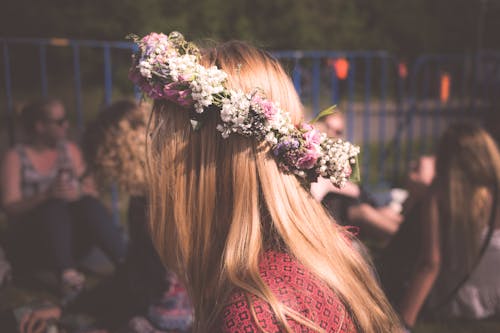
Women's Green and White Floral Headband during Nighttime
Nearly every temple in Bali celebrates this monthly event.

Essential elements for this ritual are incense, offerings of fruit and lots of flowers, rice, and holy or blessed water.

Gather a group of like-minded folks and head to the nearest body of water—a lake, pond, creek, river or the ocean. Nature will be your temple.

Begin by sitting in a circle and making garlands of flowers. You should talk, laugh or be silent as you wish, but most important, be comfortable. When everyone is settled with a garland of flowers, place the garland around the neck of another person. Light the incense and set the rice and holy water in the middle of the circle.

Go around the circle and offer the water to people, sprinkling it on them gently with your fingertips in the Balinese fashion, and offer everyone a cupful of the holy water to rinse their mouths with so the worst they speak will be holier. Each person should make a fruit or flower offering to the gods, and lay it near the cleansing smoke of incense. After the offerings are made, everyone should anoint their neighbor’s forehead with grains of rice and speak blessings aloud for each person. If a body of water is accessible, get wet, even if it is just to dip your hands or walk in the water.

Silently acknowledge the blessings in your life through prayer and meditation, and, again, give quiet thanks to the gods for the gift of your life. Unlike most Western-based rituals, there is not much talking during the Balinese Full Moon Ritual. Bask in the tranquility and listen to your thoughts.

Thursday, January 23, 2020

One Moon for All the World: New Year’s Council Fire


Any discussion of rituals for the month of January must include New Year’s Eve and New Year’s Day. I remember the drama that ensued as people around the globe stood by to witness the sunrise on January 1, 2000, perceived as the beginning of the new millennium. While many other cultures observe their New Year at other times during the year, January 1 has also become a time of celebration, reflection and an opportunity to embrace change. 

For many millennia, indigenous peoples have celebrated their own New Year in unique ways. One common element is the use of fire rituals by North, Central, and South American peoples. The Pilgrims who arrived to what was to become New England observed and documented that the Iroquois and other tribes they encountered had a New Year’s Council Fire, a time when the tribe gathered to review the past year, listen to their elders and speak their hopes, dreams, and visions of the coming year. In addition to your personal New Year’s ritual with the significant people in your life, I recommend a Bonfire Ceremony as a powerful way to bring positive change of the New Year into your life. 
 
Bonfire Ceremonies are considered to open a door or portal into the spirit world that held the promise of receiving the blessings of spirit-love, healing, prosperity, peace and anything you need for personal transformation. This ritual is also an opportunity to pay respects and make homage to your ancestors and loved ones you have lost. For this reason alone, I suggest enacting the Fire Ceremony: our culture is losing the important connection to the older people in our lives. Involving them in the rituals, ceremonies and passages of our lives could heal a cultural rift and bring deep wisdom to all. Mayan shamans could “read” the fire in a divinatory fashion, and I hear that some modern metaphysicians can do the same. If you are fortunate enough to know anyone with such skills, invite them to your fire ceremony to share what they divine from the flames.